
The Oxford English as a Second Language (ESL) program provides students with a strong foundation in the four essential language skills: listening, speaking, reading, and writing. Beyond language proficiency, the programme also develops academic competencies and essential global citizenship skills through rich learning content and engaging activities.
OVERVIEW OF
INTERNATIONAL PATHWAY
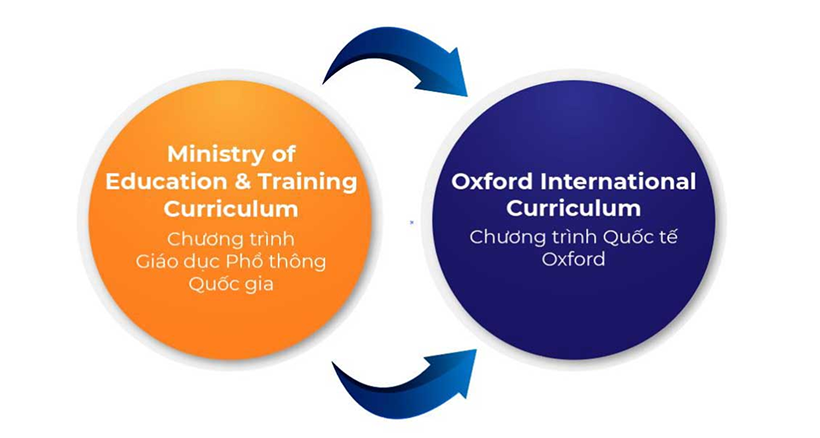
Starting from the 2026–2027 academic year, UTS officially implements an integrated pathway that combines the Oxford International Curriculum (OIC) with the Vietnamese National Curriculum. With the Oxford International Curriculum from the United Kingdom as its core academic framework, this pathway aims to develop a strong academic foundation, advanced English proficiency, and a well-structured pathway for overseas university study, while fully meeting the requirements of the Vietnamese Ministry of Education and Training.
LEARNING PATHWAY
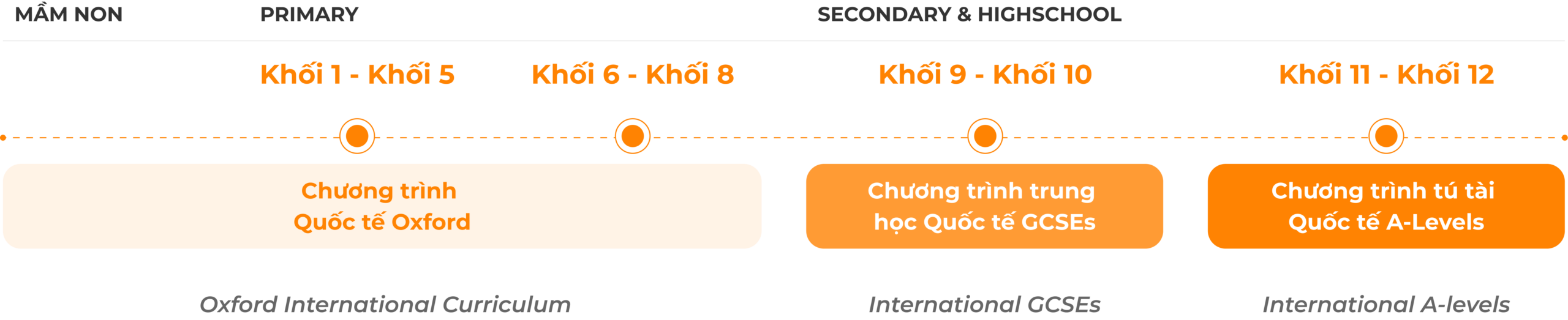
The program provides a seamless learning journey from Kindergarten to Grade 12.
Students graduate with internationally recognised GCSEs and A-Levels qualifications.
Oxford International Curriculum - OIC for Grade 1 to 8
Core subjects
English
Mathematics
The Mathematics programme equips students with comprehensive mathematical vocabulary and terminology from basic to advanced levels. New concepts are introduced through clear visual illustrations to support the development of mathematical thinking. The program also includes advanced topics designed to strengthen students’ problem-solving skills.
Science
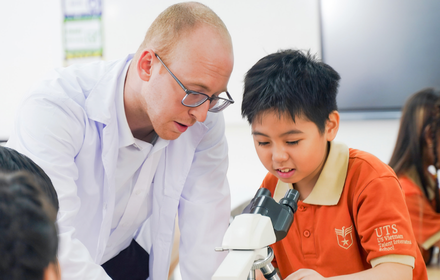
The Science program within the Oxford International Curriculum builds a solid foundation for deeper academic study and prepares students to become future scientists. It equips them with the skills necessary to succeed in scientific exploration and inquiry..
Computing
The Computer Science program equips students with essential skills for the digital age. Through each lesson, students gradually learn programming languages and algorithms to solve problems.
The program also emphasises computational thinking and creativity, enabling students to design and develop their own technology projects
Global Citizenship Skills Project
This program helps students unlock their potential by approaching real-world challenges creatively, sharing diverse perspectives, and collaborating effectively through project-based learning. Built on the Project-Based Learning (PBL) approach, the program believes every student can grow and become a creative, courageous learner who is willing to experiment and reflect on their own development with honesty and responsibility.
Wellbeing and Social Emotional Learning
Wellbeing is defined as “general health and happiness.” It represents the balance between physical health, mental wellbeing, and life satisfaction.
Students with strong wellbeing are healthy, purposeful, socially connected, and capable of managing emotions and life challenges in a balanced way.
Performing Arts
Performing Arts at UTS is taught entirely in English, allowing students to naturally use the language in creative contexts. Through hands-on projects such as theatre, puppetry, and artistic reinterpretations, students develop creativity, confidence in self-expression, and teamwork skills.
International GCSE program for Grade 9 to 10
Core subjects
English
Students develop advanced vocabulary, reading comprehension, and communication skills. They learn to analyse complex academic texts in English and confidently express their ideas using the language.
Mathematics
The Mathematics curriculum includes advanced topics such as calculus, statistics, and linear algebra, equipping students with the analytical and problem-solving skills required for STEM fields.
Global Citizenship Skills
Through interdisciplinary projects connected to global issues and real-world contexts, this subject helps UTS-ers develop critical thinking, creativity, research skills, and collaboration while fostering responsible global citizenship.
Integrated Science
Combining Biology, Chemistry, and Physics, this subject builds a strong scientific foundation while developing experimental skills, data analysis abilities, and scientific thinking for future STEM pathways.
Elective subjects
Business Studies
Provides foundational knowledge of global business, management, marketing, and finance, helping students develop managerial thinking and practical business planning skills.
Economics
Students learn how markets operate and study key microeconomic and macroeconomic principles, developing analytical thinking and logical reasoning for future studies in economics, finance, and business.
Sociology
Expands students’ understanding of human behaviour in social contexts, strengthening research and analytical skills while applying sociological concepts to real-life situations.
Computer Science
Develops logical thinking, programming skills, and problem-solving abilities through topics such as programming languages, cybersecurity, and website development, preparing students for careers in technology and digital innovation.
International A-level Program for Grade 11 to 12

Students may choose three out of the five elective subjects, including:
English
Students further develop the four core English skills to read, analyse, and produce academic texts.
Mathematics
The A-Level Mathematics curriculum includes complex topics such as calculus, statistics, and linear algebra, equipping students with advanced analytical skills required for STEM disciplines.
Chemistry, Biology, and Physics
These subjects provide comprehensive knowledge of theory and experimental techniques, preparing students for university programmes such as medicine, engineering, and environmental science, while strengthening research and data analysis skills.
Psychology
Students explore how the human mind works, studying psychological theories and research methods that support future pathways in the social sciences.
Business
This subject builds strong foundations in business principles and strategies while developing analytical thinking, planning skills, and an understanding of global economic contexts, preparing students for future careers in business, management, and entrepreneurship.
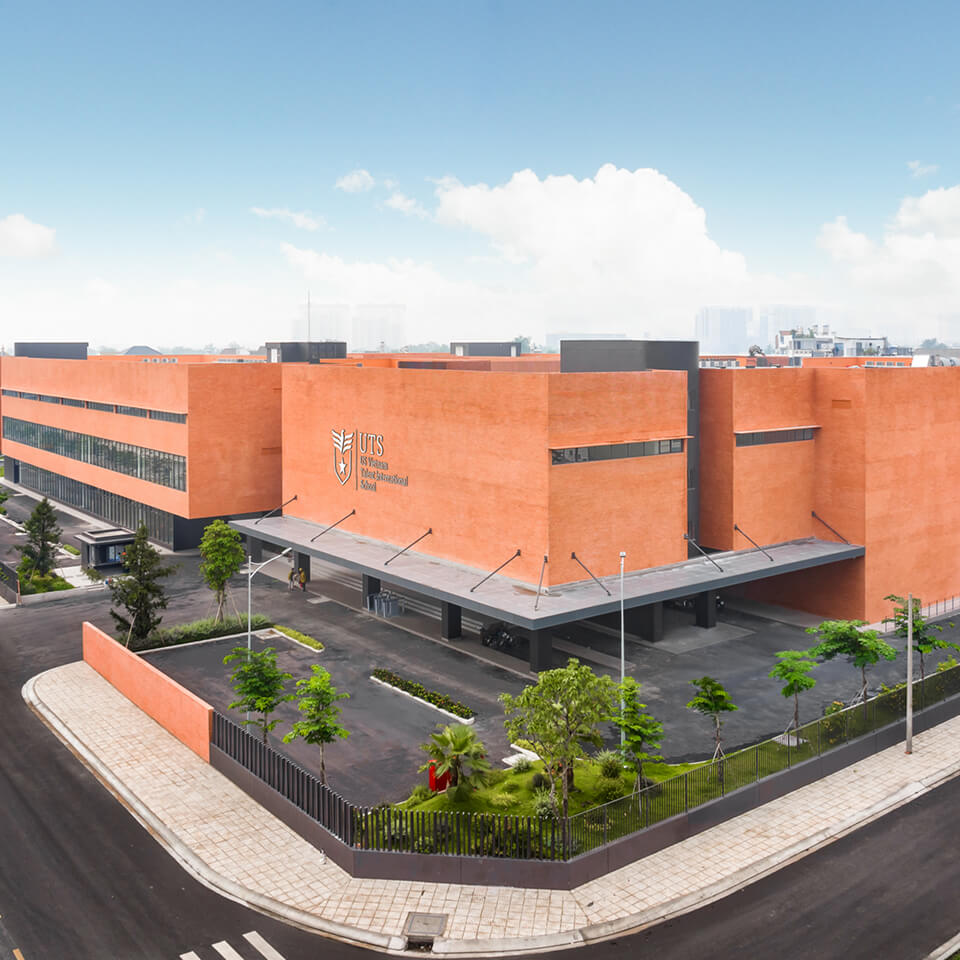
UTS - The First OxfordAQA Examination Centre in Ho Chi Minh City
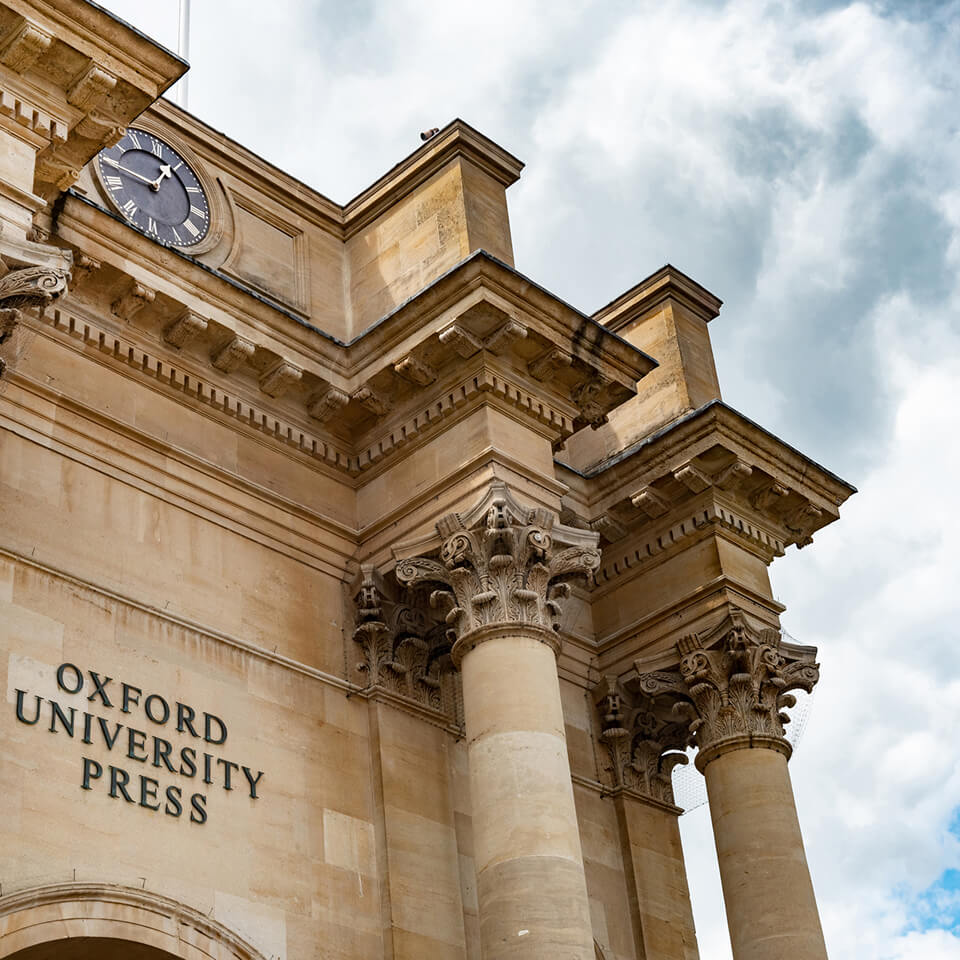
Oxford University Press - A leading global academic publisher
Sharing from UTS Community
William Arthur Klepacki Jr
Vice Principal International Program

William Arthur Klepacki Jr
Vice Principal International Program
Register for Consultation